I Am Once Again Asking for You to Use Decent Stemware
Let's condemn the tiny bistro glass to the dustbin of history

Nothing about going to a bar and ordering a glass of wine drives me up the wall nearly as much as receiving one of those dinky little glasses. You know the one. Every natural wine-focused bar I’ve been to seems to have them, maybe bought from the same baseball-capped plaid-wearing Brooklyn-based wine glass dealer. They’re these little bistro-looking glasses, maybe the size of a soda can tall with about an inch of stem that end up getting filled nearly to the brim if you’re serving a standard 5 ounce / 150ml pour.
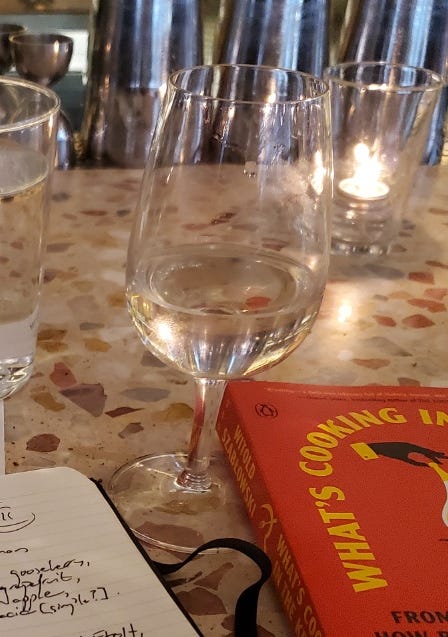
I’m sure there’s some good Business-Related reason all these places seem to have this exact same glass. Maybe it was a good deal on WebstaurantStore, maybe you can fit more of them into the dishwasher under the bar, I don’t know. What I do know is that they make me sad. All sorts of cool, interesting wines, wines made from indigenous grapes from far-flung corners of the world, made with low-intervention methods and care for the product and care for the environment and all that, dumped into this tiny little glass, barely bigger than the ISO-standard tasting glasses you use in WSET exams to evaluate an ounce of wine. There have been multiple times I’ve been thinking about going out for a glass after finishing up working for the day and remembered that I’m probably going to have to drink from one of these things, leading me to deciding to just stay home instead. Which is better for my wallet, but probably not the sort of thing a wine bar would love to hear.
I don’t think I’m asking for much here. I just want wine bars to use decent stemware.
Let me explain a bit, in case I’m coming off like a complete lunatic.
Wine, like anything we eat, derives most of what we think of as “flavor” not from taste but from smell. François Chartier, in his excellent book Taste Buds and Molecules, says that something like eighty or ninety percent of the sensations that stimulate our appetite come from aromas. Smell is much more physical than we give it credit for: those signals occur when molecules bind with olfactory receptors in our nose. Particles become airborne; they waft up to our nose; they bind with a receptor; we get a smell.
There are two primary kinds of olfaction, or smell: orthonasal olfaction, which is aromas reaching your nose through your nostrils—the kind you probably think of when you think of smelling—and retronasal olfaction, which is when aroma molecules reach your nose the back way ‘round, coming up your throat. “Aroma” and “flavor” aren’t actually processed by different senses. They’re both smell, one before something’s entered your mouth (orthonasal / aroma) and one after (retronasal / flavor.) Your tongue processes structural features, like acid, bitter, saltiness, sweetness, and the like.
Those molecules, whether they come through your nostrils or your throat, are actually a wide variety of aromatic compounds that become present in the things we eat and drink at a bunch of different points during their production process. In wine, a compound might be a feature of the grape variety itself, might come from exposure to things like sulfur, might come from a bacteria metabolizing something, might come from touching wood for some period, the list goes on. Winemakers use smell a ton to assess how a wine is doing as it’s being made and can adjust based on their sensory impressions. A compound might even come about after the wine’s been put into a bottle as the result of chemical reactions happening through tiny amounts of oxygen ingress through a cork, as in the case of tertiary aromas, or “bouquet,” as Meg Maker describes here.
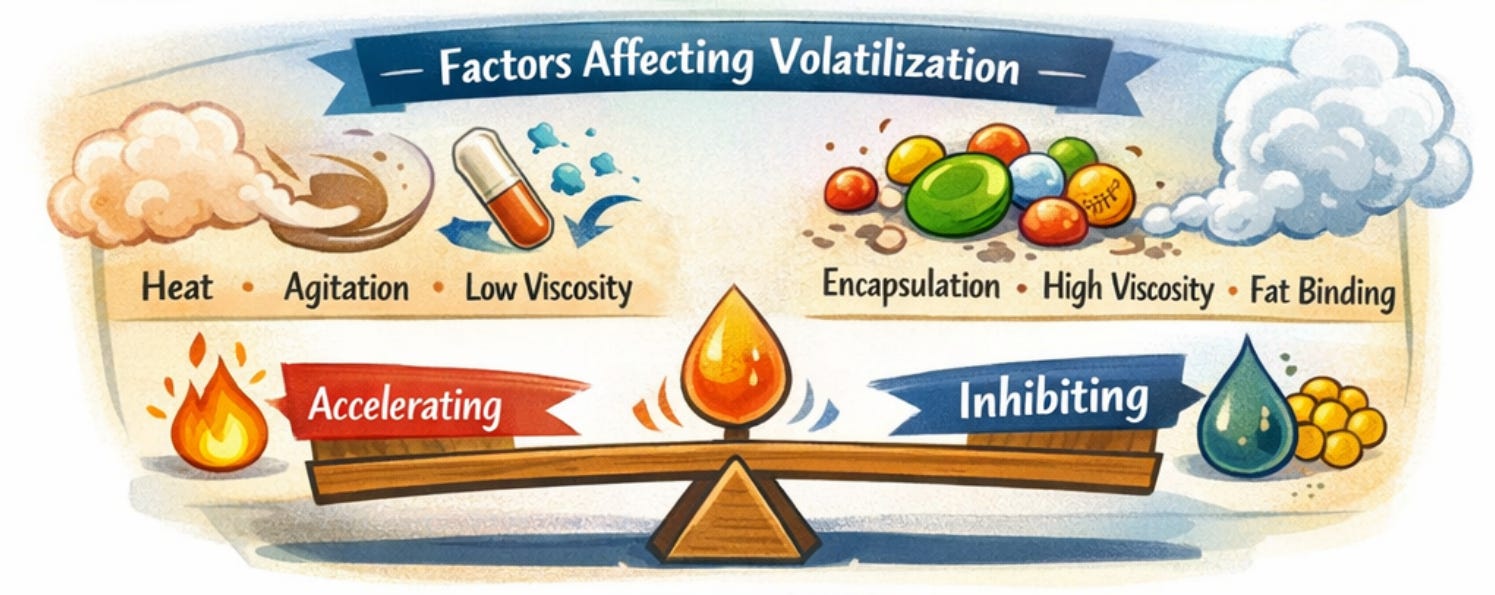
These compounds have different properties and, when they’re exposed to air, they turn into vapor—also known as “volatilizing”—for an equally wide variety of reasons. This post at flavorist.com goes into a lot of detail on it, and I would suggest checking it out. For example, top-note esters, the compounds that produce fruity flavors, are small and light, and thus they can escape into air easily; alcohols, because they can form hydrogen bonds with the water molecules, won’t evaporate as fast and therefore won’t become smells as easily. On top of this, in the case of wine, different aromatic compounds have different solubility in ethanol than they do in water, so a wine with a higher ABV (like a fortified wine like port) might let some compounds evaporate earlier than they would in a lower-ABV wine. Because compounds have differing volatility, they become smells at different times, too, so there’s a time dimension to smell. All this chemistry is why wine can have such a complex and interesting array of aromas and flavors that seem to morph and change over the time you’re drinking it.
The key constant here is air. A molecule can’t volatilize into the air if it’s not touching air. So you need your wine to be in contact with air for smells to emerge. Having a greater amount of your wine in contact with air—a larger surface area—means that there’s more space for aromas to leave the wine and find their way into your nose.
Some aromas will be relatively potent and easier to smell even without a lot of molecule concentration; others will be more delicate and will need more molecules concentrated into a smaller space to hit your olfactory receptors for you to perceive them well.
Moreover, you can help kick volatilization along by agitating your wine, which “refreshes” the surface of wine in contact with air and allows the compounds that were nearer the bottom of your glass to touch air and become vapor.
If you’ve been keeping score just now, you might notice that we now have a basic theory of what a wine glass should look like.
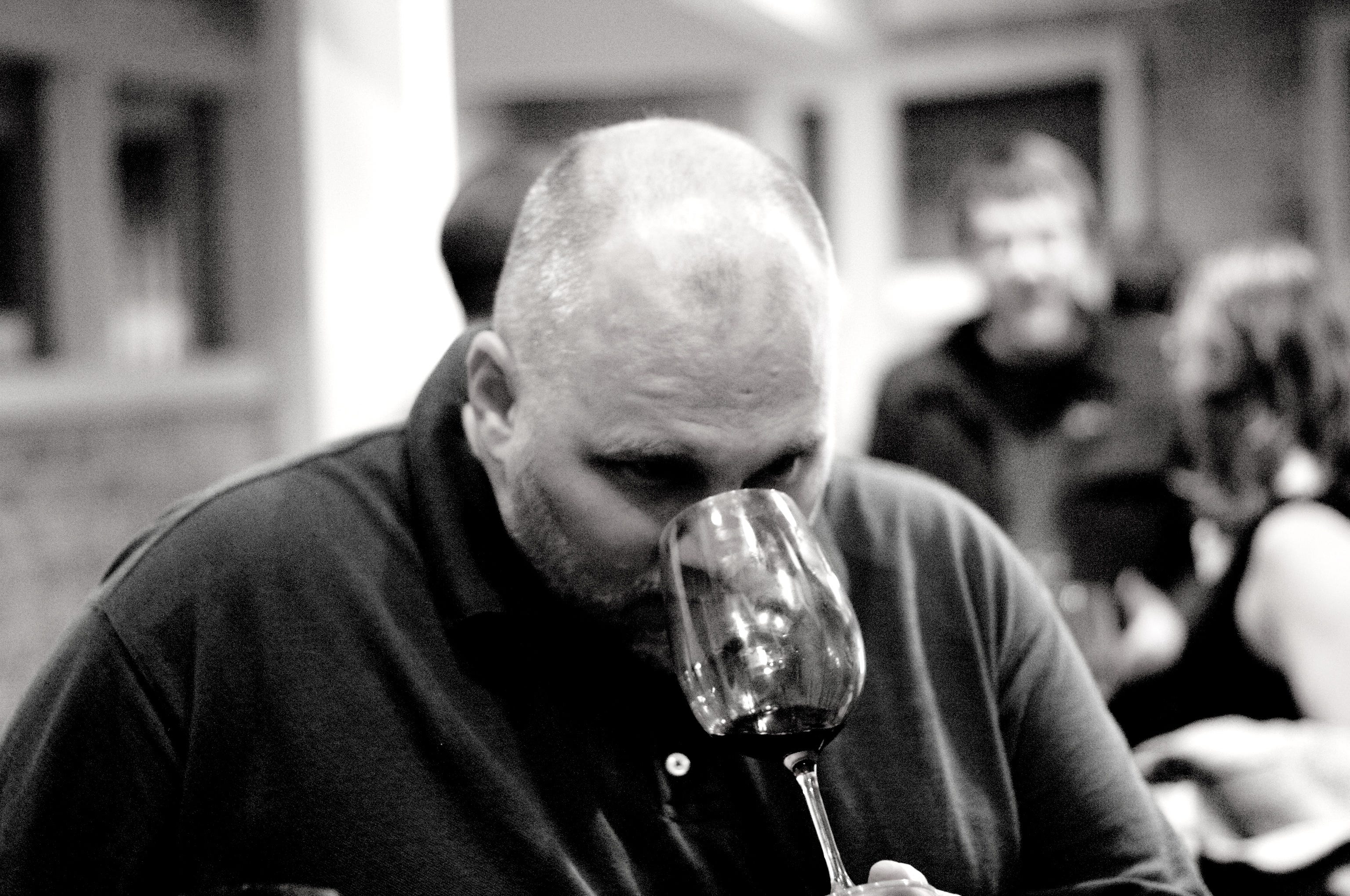
Let’s assume that standard 5 ounce / 150ml pour again. To maximize the aromatic experience, you need the glass to be at its widest at exactly the spot where that standard pour size ends. So something like a big rocks glass would also work here, but you need to be able to agitate your wine to keep shoving the aromatic compounds towards the top. You could do this with a fork or something, but that both is a little too hard on the wine and creates another dish. What about swirling? That’s gentler. You want swirling to be easy in your glass, so you need the bottom of the glass to be a circular bowl, which helps the movement of the liquid, and you need your glass to have enough headroom over the top of the wine so that it doesn’t get thrown everywhere when you try to swirl. It’s also helpful to have the bowl some distance away from where you’re gripping the glass, because that allows relatively low work from your wrist to magnify by the time it reaches the bowl, which creates a good amount of centripetal force in the actual swirling. It would also be helpful, especially for more delicately aromatic wines, for the glass to curve inward a bit towards the top: this helps collect volatilized aromatic molecules near the top of the glass where your nose will be, allowing better contact with your olfactory receptors. And you want to be able to get your nose inside the glass while you’re sipping, so that you can smell all of this as it’s going on.
Let’s break that list of features out:
1.) Widest surface area through widening of the glass at a volume of 5 oz / 150ml;
2.) Narrowing of glass near top to concentrate aroma molecules;
3.) Bowl shape to aid swirling;
4.) Distance between hold point and bowl to aid swirling; and
5.) Enough space between surface of wine and top of glass to prevent spillage when swirling.
Assemble them together, and you get something that looks like this:
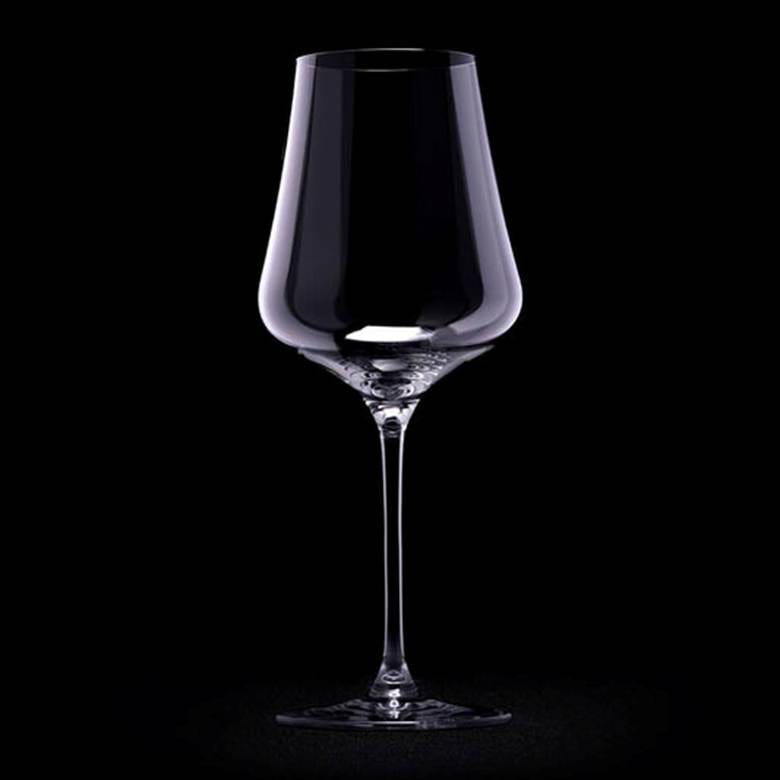

That is, a standard wine glass.
With all this in mind, let’s go back to that little bistro glass.
A standard wine glass, in order to have enough room for a standard pour to be swirl-able, needs to actually be closer to 14 or 15 ounces of total volume. The bistro glass is way too small, more like 7 or 8 ounces, and so a standard pour goes much closer to the top. We not only get a smaller surface area of wine (= less volatilization, and thus less aroma), but the glass being so full means it’s either difficult or impossible to swirl. Not that you could really swirl it anyway, since the incredibly short stem combined with the weight of the wine would make it much more effortful to swirl than would be the case in a standard glass. Because the wine is so close to the top and the opening is so small, there’s no way you’re getting your nose inside the glass while you’re sipping. There’s not enough room, and even if there were, your nose would end up in the wine. You can sniff or you can sip, but never both at once, so you only get one of orthonasal or retronasal olfaction at a time; you only get half the real flavor picture, half the experience.
There are all sorts of subtly differently shaped wine glasses intended for different varieties that are hand-blown and cost a ton of money. I don’t care about any of that. Maybe they’d let me eke out a marginally better experience, but let’s be real, we’re living through an economy on fire and I don’t have enough space in my house for different glasses for Bordeaux vs Tsinandali. For me all of the ROI comes from a small handful of things: being able to swirl a standard-size pour, having a good surface area at the fill line, and the opening being big enough for me to fit the space between my nostrils and my top lip inside the diameter of the glass. A decent universal, like the Gabriel-Glas I pictured above (what I have at home), does 97% of the work. Hell, even the $20 8-pack I got at Crate and Barrel a long time ago gets like 80% of the way there. Even if it’s not an awesome experience, it does the job. The bistro glasses don’t.
Keep them for smaller pours of fortified wine or flights or whatever, you don’t need to throw them out. This is all I beg, all I plead: please also have a correctly sized wine glass available for full pours. It would make me so happy.
It's crazy how much bars are sacrificing the quality of their product just to chase a trendy 'bistro aesthetic' or save a little rack space in the dishwasher. Great article Stephen.